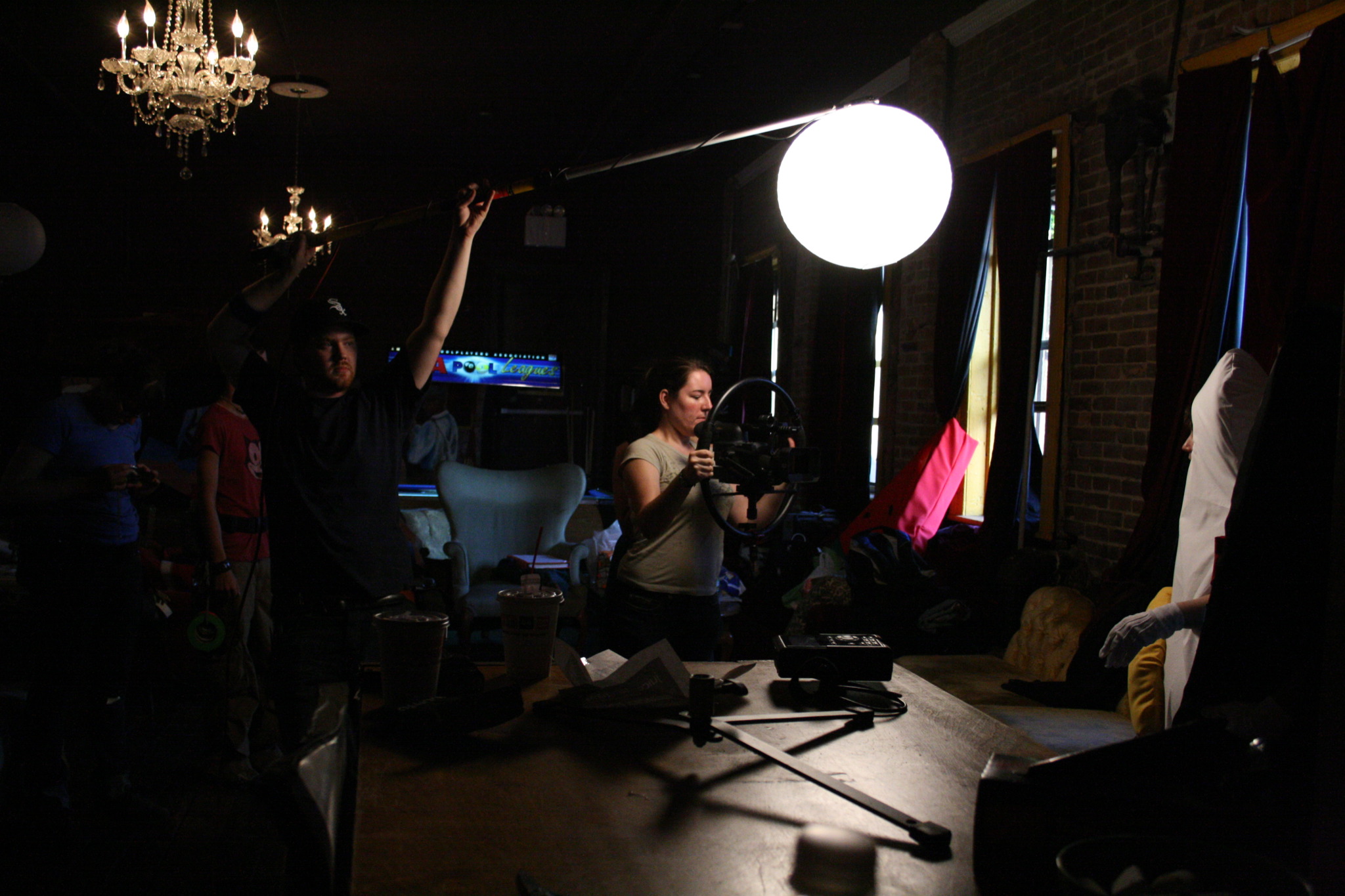
Comet Tale Productions is a Boston-based video production house. We hope that through this blog you will learn more about the behind-the-scenes of corporate video.

www.comettaleproductions.com


Friday, August 30, 2013

The Power of the Still

Images are gripping, iconic, powerful. They define eras. Who hasn’t seen Dorothea Lange’s migrant mother of the Great Depression, the American soldier kissing a young nurse on V-J day, or the naked young girl burned by napalm in the Vietnam War. Three snapshots, three incredibly powerful images. Their power comes from that specific moment in time. The photographer captures that moment forever in the chemical reaction of silver and light—not the second before, not the second after.

With film, images are captured 24 times a second. That’s 24 individual still frames every second. So if the saying goes that a picture is worth a thousand words, then a minute of video is just a little shy of being worth 1.5million words. In great films, the composition of each shot is meticulously designed to the extent that a still taken from almost any moment will result in a powerful image capable of standing on its own.

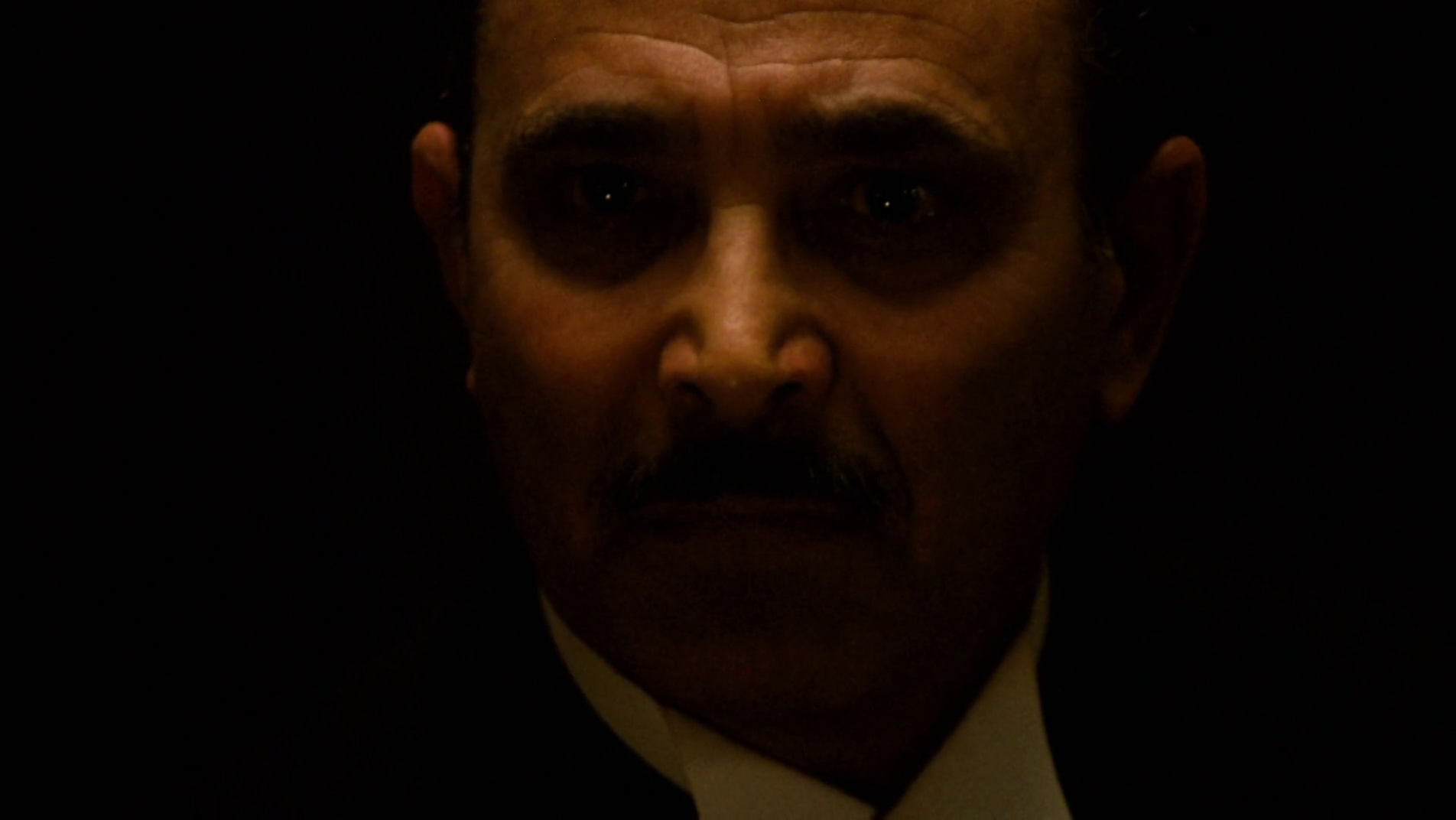
Take the opening image of Francis Coppola’s The Godfather which shows a desperate man worked into a corner so that his only course of action for true Justice is to turn to the mafia.


Or the deep focus shot in Orson Welles’ Citizen Kane that tells three stories with one image.


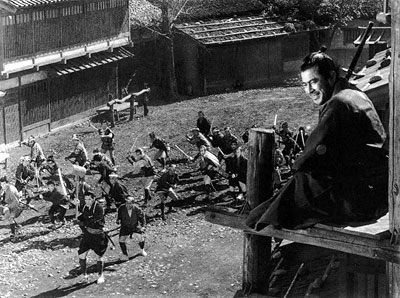
Or this image from Akira Kurosawa’s Yojimbo which shows the roving samurai, a puppet master, perched above his puppets.


Photography underwent a revolution with the advent of the digital camera. So many haphazard images flood the internet now that we can document every moment of our lives. Film is undergoing a similar revolution as digital cameras provide higher quality for fewer dollars. While the mass availability of these media allow for teenagers to mindlessly post photos of their breakfasts, it also enables any individual the opportunity to create great art. And despite all the fluff, the truly great will rise to the top.

Saturday, August 24, 2013

Film for Good

There is no denying the benefits of video use in the corporate world. Whether selling a service, product, or lifestyle, a visual aid is sure to enhance your marketing prowess this day and age. But what if you're not "selling" something? What if your corporation doesn't operate for-profit? How can video be used to leverage a cause?

Many non-profit organizations (NPO's) in the US share a similar struggle: how to raise the most money possible for your cause without spending too much on overhead and fundraising. It's an unfortunate hurdle in the corporate world, but a hurdle nonetheless. However, there are proven successful ways to allocate those limited funds to receive the greatest return.

I can't speak much on overhead, but fundraising for your cause will surely require a marketing force of some degree. After all, the public needs to know the issue or injustice exists in the first place! And more importantly, we need to know your organization has a solution and there are ways we, the public, can help.

In March 2012, San Diego-based non-profit, Invisible Children, released a campaign video on YouTube. 


This video, though lengthy by YouTube standards, shocked the non-profit community. In a matter of days, the video went viral and attracted dozens of millions of views. It now stands shy of 100 million. This popularity was unheard of for a charity campaign. 

Invisible Children successfully leveraged the powerful medium of film to capture our imaginations and touch our hearts. The video attracted millions of viewers, but more importantly, it brought hundreds of thousands of donors, millions of dollars, and countless volunteers to the Kony 2012 campaign. A small marketing investment turned into one beautifully inspiring video and led to a remarkable public response.

If you have devoted your life to a cause, it is bound to be important. Don't keep it to yourself. Make a video, raise awareness, and let the public join you in the fight. 

For more videos and ways your non-profit can leverage the power of film to improve your campaigns, please refer to this Stay Classy article. 

-- by Ryan Brandenburg

Tuesday, August 20, 2013

A More Memorable Video

“There are no rules in filmmaking.  Only sins.  And the cardinal sin is dullness.” – Frank Capra

Nobody likes a boring anything.  No matter what art form, no matter what aspect of said art.  Nobody enjoys sitting through a video which seems like the artist is just on cruise control, going through a checklist of must haves.  Nobody enjoys watching a video that seems just like every other video ever made.  Logical enough, right?  And yet think about all the commercials you see.  In fact, go watch television right now.  Sit through and pay attention to a full segment of commercials. How many are interesting?  How many will you remember?  And how many are dull and forgettable?  I’m willing to bet the vast majority will have been forgotten by the next commercial break.

So why do people stick to the same tired formulas?  Let me clarify first and foremost that there is value to formula.  There’s comfort in following well-worn formulas and the viewers will take pleasure in this.  The difficulty comes when one relies totally on the formula to carry the film instead of adding interesting unique characters and honest stories on top of the base formula. 

The basic reason people fall back on the formulas is creative laziness.  Let’s use a college advertisement as an example.  Instead of coming up with a new idea, so many schools will advertise the statistics intercut with a montage of smiling students and random shots of the campus.  That’s it.  Congratulations, you’ve made an advertisement for a college.  But not your college.  To overcome the pratfalls of dullness and formula, one has to think what sets your college apart from others.  This applies to businesses and narrative films as well.  What sets yours apart from others?  What sets your voice apart from others?  When you dig into the specifics of yourself and the subject, your product will inevitably become more creatively daring and memorable.  When you focus on what sets you apart from others, the viewer will set you apart from others as well.   

And when that happens, your video will truly be worthwhile.   

-- by Curt Ege

Monday, August 12, 2013

So many cameras, so little time.

The digital world is obsessed with the camera. What camera are you shooting on? What sensor does it have? Whereas old school directors of photography would test endless amounts of film stocks to ensure that light would react just the right way with those small strips of 35mm celluloid, today’s digital filmmakers run the camera’s themselves through the same gauntlet. Each camera is like its own unique film stock. Each handles light and contrast and color differently. So how do you choose which one is right for your project? As always, budget is a major factor.

For those of you looking to go viral, the iPhone is a viable option. Provided that the content of the piece is colloquial enough and doesn’t need the super-refined professional look, you should be able to use your phone to your heart’s content. The key to a successful video when willingly sacrificing image quality is to be certain that your story is killer.

iPhone aside, there are so many options to choose from that it would be impossible to cover them all. Canon, Nikon, Sony, RED, Panavision, Arri, BlackMagic—all these brands have cameras capable of shooting high quality video. I’ve had the most experience with different Canon products, so with a couple exceptions, I will stick with Canon (they aren’t paying me to write this and I have no official connection with the company. David Meerman Scott’s book on Real Time marketing encouraged me to let you know this and that my opinions are my own and not Canon’s or Sony’s or Arri’s &c.). I do provide links to the purchase screens of most of these cameras so that you can look over the specs if you feel like geeking out a little.


(1) Canon Vixia HF M500 – this little guy won’t break the bank and does still capture full HD video. Perfect for something along the lines of webinars or weekly update videos, this camera is designed to be used by just about anyone. Even though it’s full HD, it doesn’t have nearly the same look as some of the high quality cameras on this list (such as shallow depth of field, a large dynamic range). Rental rate from Rule: they don’t rent these; Price from B&H: $499.99 (after $50.00 savings)

(2) Canon 60D – Canon recently announced the 70D which replaces the 60D, but I haven’t had the chance to work with a 70D yet. The 60D is a quality little camera that offers a number of manual controls. One of the perks of the camera is its flexibly rotating LCD monitor. A light-weight camera, this would be a good starter for someone looking to make the jump into higher production valued productions. Rental rate from Rule: they don’t rent these either, but they do sell them; Price from B&H: $859.99 (after $200.00 savings)

(3) Canon 7D – running straight through the Canon lineup here, the 7D is another DSLR. As opposed to the 60D this takes CF memory cards. As with most of the Canon DSLRs it takes some pretty solid stills in addition to the video capabilities. If you’re serious about incorporating video in a meaningful way in-house, this is honestly the lowest quality camera I would consider investing in. Rental rate from Rule: $150/day; Price from B&H:$1,699.00

(4) Sony NEX FS-100 – the first and only Sony camera to make the list. This camera has a Super 35 CMOS censor, shoots pretty well in low light, and captures some nice images overall. Its ergonomics are a little weird especially if you’re going hand-held, but this is a solid machine. Rental rate from Rule: $250/day; Price from B&H: $4,499.00

(5) Canon 5D mkIII – the newest version of the 5D, the mark III is the next step in the Canon food chain. Good in low-light and not too bulky this camera can travel well and shoot without necessarily needing a bunch of lights (though lighting is always a plus). Rental rate from Rule: $150/day; Price from B&H: $4,099.00

(6) Canon C300 – now we get to some of the more serious cinema cameras. The C300 is designed exclusively to shoot video and provides a lot more information in the files it records which in turn allows for more manipulation of the image in the post-production process. For a camera like this, you’d probably want to rent it as needed unless you’re looking to become an in-house video production powerhouse. Rental rate from Rule: $400/day; Pricefrom B&H: $15,999.00 ($13,999.00 after savings).

I would be remiss if I didn’t include these next two cameras on the list. While I have not personally operated either of these cameras, I have seen them from a distance. There seemed to be a faint golden aura around them (not as strong as the golden aura around a 35mm film magazine, but still). That said, these two cameras would be used on a high-budget video—corporate film one might say—and should definitely be handled by professionals who have experience with the cameras.

(7) The RED Epic X – they shoot feature films on this camera. Enough said. Just for funsies the prices. Rental rate from Rule: $950/day. Price from RED (B&H doesn’t carry Red cameras) $46,885.00

(8) The Arri Alexa – the best in the business right now. Rental rate from Rule: $1200/day; Price: your first born child.

The most important thing to remember when it comes to making your corporate video (or corporate film) is that the tools do not make the cinematographer. Someone with talent will be able to produce quality images without having to resort to the most expensive camera on the marketplace.

-- by Joseph Baron

Friday, August 9, 2013

What the Hell is a Grip?

You’ve seen them in the credits. Your friends who know a thing or two about the industry might like to drop some line about “the grips.” But what is a grip and what do they do? Your typical corporate video probably won’t need a big enough crew to have a dedicated key grip. Instead, the lighting technician or camera operator may be wearing a couple hats and go into grip mode at points during the shoot. Thus, I will seek to inform you about what exactly a grip does and to highlight some key pieces of equipment that might come in handy (plus, it’s always fun to drop stories about “the grips.” Like: that one time the production assistants beat the grips at darts resulting in the grips doing the PAs wrap duties the next day. Or: that one time the grips decided to strip down and jump in the nearby river after wrap and cat call all the local ladies).

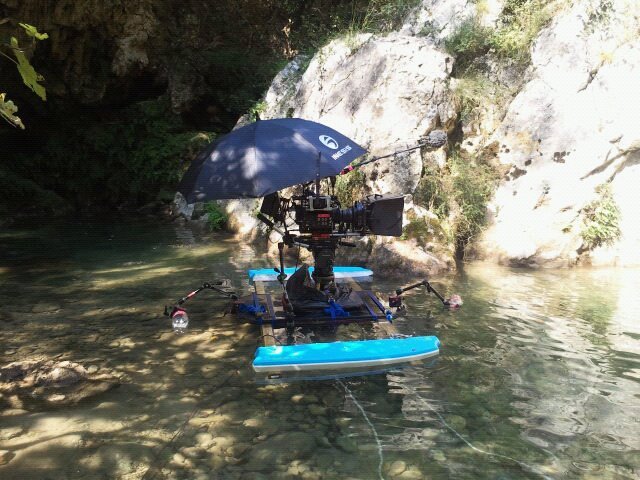
The grip department is basically the support for the camera and electrical crews. On a film set camera, grip, and electrics works together in a three-way tango of sorts to set up every shot. While the grips may be the brunt end of a fair amount of jokes, it’s all in good fun. Everyone has immense respect for the grips who not only have to be incredibly strong physically, but also intelligent enough to find creative, secure, and fast solutions to a number of problems (for example: who do you turn to when you need a bootleg flotation device for your camera? the key grip).

For more photos like this one, check out ShittyRigs.com
Some of the things grips do on a regular basis is: lay dolly track, operate the dolly, rig the camera in all sorts of crazy places (such as cars, trains, plains, snowmobiles, helicopters, &c.), set up massive stands on which to place lights, use nets/flags/frames to shape light, and much more. Since the grips are concocting all sorts of fun rigs, they use a wide variety of tools and hardware to get the job done. Often it has a colorful name, e.g. mombo combo, Gary Coleman, duckbill, Cardellini, gator clamp, apple box, meat axe. Since there is so much stuff in the grip department’s arsenal, I’ll stick to some of the items that you’re more likely to need on a low to medium budget video.


The c-stand – a key player in the grip arsenal is the century stand (almost always called a c-stand). This stand has 1001 uses from holding nets/flags/&c., to holding a boom pole, to holding some bead board, to holding up some cloth for a backdrop. If you’ve been noticing the pattern, it’s great for holding stuff up.

The sandbag – for every stand, there should be at least one sandbag. Since you’re almost always adding weight to the top of these stands, they become quite top-heavy which of course increases the risk of them falling over. The solution to this: toss a sandbag or two on the base of the stand.


Nets, flags, and silks – these accessories are used by the grips to shape and control the lights set up by the electricians. They come in a variety of shapes and sizes from 18”x24” to 2’x3’ to 4’x4’ and larger. Nets generally have a transparent mesh that cuts down on the overall light output from a given source. Flags (also known as solids and sometimes floppies if they have a portion that flops down) are opaque pieces of heavy cloth that serve to eliminate all light output in a given area from a given source. Silks are translucent and serve primarily to diffuse light, creating a softer beam with less noticeable shadows.

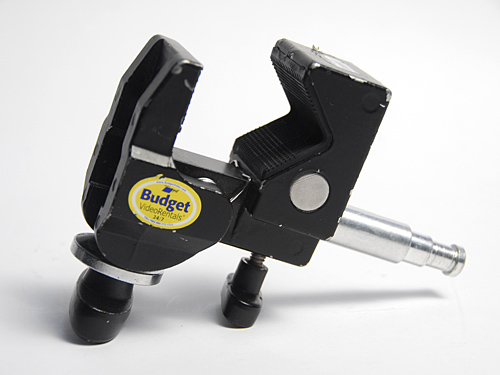
Mafer clamp
Cardellini clamp

Duckbill

Clamps – there are a number of different clamps used in the industry. For now I’ll highlight three of them. The mafer clamp can tighten on to a variety of surfaces and is useful for hanging lights and things from I-beams or those metal grids in the ceiling. A cardellini clamp has a more narrow clamping head and can fit in some places that a mafer clamp can’t. This third clamp has the most names of any piece of equipment I’ve heard of—platypus clamp, quacker clamp, duckbill clamp, bead board holder, &c. This clamp is designed to hold something like bead board where the pressure from the clamp is distributed over a wider area so as not to break the board.

A family of apple boxes
Apple Boxes – apple boxes also have a wide variety of uses. They serve to boost up some shorter sound people so that they can place the boom in ideal position. They can level dolly track on rough terrain. They are often used as seats. They come in four different sizes: full, half, quarter and pancake.

A fischer dolly on track
Dollies and Track – there are a number of different dollies in use in the industry. Two of the major brands are Fischer and Chapman. The dolly is used to mobilize the camera whether it’s a subtle push in or a dramatic tracking sequence. While there are times when certain dollies can have free reign of the floor and move without track, the dolly track (round rail or square) is used to provide a smooth surface for the dolly to operate on. On larger productions there is one grip who is specifically in charge of the dolly (credited as the dolly grip).

This is only a small cross-section of a department that has decades of tinkering experience. The equipment is constantly evolving as grips look for ways to solve problems in simpler, more efficient ways. When it comes to gripology, creativity abounds.

-- by Joseph Baron

Thursday, August 8, 2013

9 Pieces of Lighting Equipment You Should Know About

As promised, here is the start of a series of posts on some of the equipment used in video land. Whether you’re looking to have some inexpensive DIY equipment to use for a weekly video post or you’re looking to understand some of the bigger lights that go into higher budget projects, this post will look at some of the tools available to you. If you talk to people passionate about lighting, they’ll tell you that what they do is paint with light. Take a look at the masterful use of light by Rembrandt, Vermeer, Grimshaw, Renoir, and other great painters. Lighting for film strives to create as much beauty as the works of those artists.
Vermeer - "The Art of Painting"
Renoir  -"Self-Portrait"

For the lower end of the budget spectrum, the tools you have serve more to illuminate than to light, but realize that the art of lighting involves a deep understanding of how light behaves and interacts with its surroundings. A post for another day will be to look at how light can be manipulated to fit certain situations. For now, however, I’ll stick to a more basic description of the lights.

(1) Extension cord – If you are an astute observer, you will have noticed that an extension cord is not, in fact a light. What good is a light if you can’t get electricity to it? While most of the lights will come with a power cord, you often need to place lights farther away from an outlet than the basic cord allows. For most of the lights in this post, a standard hardware extension cord will do the trick. Snag a couple of 25’ cords from your local hardware store and you should be fine.

(2) Practicals – a practical isn’t any one specific lighting instrument. It’s any old light that will be visible within your scene. Table lamps, floor lamps, street lights—these can all act as practicals in your video both illuminating the scene and providing some nice mise-en-scène.
A clamp light
(3) Clamp Lights – these lights can be bought at your local hardware store for under $20. They take your typical incandescent bulbs so you can have some freedom to pop in a 60w or a 200w depending on how much light you want (60w will be dimmer than 200w). These lights come with a clip that can attach to tables, pipes, rails, the metal grid of the ceiling, etc. If you plan on hanging any lights above people, or in an area where people will be present, it is always a good idea to add a safety to it—meaning take some rope and tie it up so that if the clamp slips, the light won’t fall all the way to the ground (or your face). These lights provide a direct beam of light which will most likely cause harsh shadows. In a later post I will talk about different ways to “soften” the source of the light in order to help deal with those shadows.

A Chinese lantern at work.
(4) Chinese lanterns – a staple of the up-and-coming lighting technician, the Chinese lantern is exactly what it sounds like. They are light weight and inexpensive which makes them great to use on a budget. Depending on where you get your lantern, you may have to purchase a socket separately. These, like the clamp light, take incandescent bulbs. One thing to be very careful of is the wattage rating for different sized paper lanterns. Do not use a 150w bulb in a lantern that says the maximum wattage is 40w. This is a fire hazard, so be sure to check the labels/internet to see what size bulbs can go in what sized lamps. Unlike the clamp light, the Chinese lanterns emit a nice soft light that will produce much less stark shadows.

Now we’re going to move on to some more professional lighting instruments that you might consider using on higher budget projects. If you’re looking to add an in-house video unit, you can purchase a good amount of equipment at B+H Photo and Video. If you’re looking just to dabble in your free time without making purchases, there are a number of rental houses (in the Boston area you might try Rule, Quixote, or High Output). Freelancers might also have their own lights that they will include as part of their personal equipment package.

A Lowell lighting kit complete with Pro, Omni and Tota
(5) Lowell lights (the pro, omni, and tota) – this is a bit of a three-for-one deal. A basic Lowell lighting kit like the one shown above comes with three different lights ranging in wattage from 200w – 700w. Compared with your average 60w incandescent lamp, these output a bit more light. Two of the lights pictured here (the pro and omni) come with barn doors that allow you to control the shape of the light. The tota is more difficult to control but offers higher output than the other two. As I affectionately say, the tota basically vomits light.
A set of Arri lights

A set of Mole-Richardson lights

(6) Tungsten Arri/Mole-Richardson lights – The Arri and Mole-Richardson lights shown above are tungsten sources that can range from 100w all the way up to 2kw. As you can tell, the lights are getting a bit brighter as we go. These lights all come equipped with barn doors to help shape the light, and you can also elect to add some other accessories like scrims (circular metal objects that serve to reduce the intensity of a light).

A kino

(7) Kino flos - Kinos are fluorescent lights that avoid the pitfalls of many typical fluorescent fixtures. The main problem with fluorescent lights comes from their slightly greenish emissions. Kino's tubes, however, don't suffer from this problem. They can come balanced for daylight or tungsten and are nice, light-weight sources that produce a soft, even light.


ETC Source 4
(8) ETC Source 4s – typically used in theater, these lights have been popping up more and more in film lighting kits. They come in different degrees (from 5° to 50°) with the narrower angle being a more direct beam of light. Another aspect that sets the source 4s apart from other film instruments is that they have shutters built into the bodies of the lights to create precise cuts of light. The barrel can also be slid forwards and back to focus the beam creating sharp shadows or shadows with more feathered edges.

18kw HMIs
(9) HMIs – the big guns. HMI lights are the big daddies. The smallest is around 575w and the largest, like the pair shown in the picture above, are a whopping 18,000w. These have a wide variety of uses, but one such use is lighting daytime exteriors. The sun is so powerful that in order to use artificial light in a scene, it’s got to pack a punch itself. Your average household circuit will blow many times over if you somehow managed to plug an 18kw light into it. For any HMIs bigger than 2kw, you’re going to need to run power from an external generator or tie in to the main (which is extremely dangerous and should only be done by certified professionals).

This concludes a brief survey of some lighting instruments you should consider when delving into the world of video. Just to let you know, I did not include any LED lights on this list because I haven’t worked with them enough. But LED lights are making a push into the film scene. Happy lighting!

-- by Joseph Baron


Monday, August 5, 2013

A Study in Awful

As is known to happen during the summer movie season, people are talking about an unexpected hit.  No, this movie doesn’t involve super heroes and didn’t get good reviews.  It didn’t even do well at the box office.  In fact, it didn’t go to theaters.  This movie is “Sharknado,” and everybody’s talking about it.

I watched “Sharknado,” I admit.  And it was terrible.  I’ve been intentionally watching terrible movies lately and confess that I take pleasure from it.  Now, I understand there’s value in watching bad movies.  It teaches you to recognize what is good and bad in a movie and you can then apply this knowledge to critiquing or making quality movies.  But I’m not talking about enjoying these terrible films as a learning experience, and I’m not talking about enjoying them ironically.  I’m talking about enjoying them as they are.  Call it a guilty pleasure if you want, but it’s a pleasure nonetheless. 

And yet I find that I take more pleasure from watching a bad horror movie than, say, a bad action movie.  I’m not sure how many people share this feeling, but I know I’m not alone so I figure that’s enough to devote my time to figure out why.  And no, I’m not gonna say it’s just because I like horror better because that’s an intellectually lazy answer. 

So to compare action and horror, we must figure out how we enjoy these different genres.  To answer this is to answer why horror is a more enjoyable bad movie experience.  Action is about gratification.  We see the gunfight, we see the explosions, we see the extraordinary set pieces and we react.  In a bad action movie, we see bad gunfights, bad fight scenes and do not get the chance to react in a good way.  Because of this, a bad action movie like “Death Race 3” is not only bad, it is, perhaps more criminal, boring.    

Horror, on the other hand, is about anticipation.  We look forward to a scare.  We are on the edge of our seat waiting for it to happen.  At the end of the movie, maybe it was terrifying throughout and will stick with you.  But even if these expectations were never met, the initial experience was still somewhat enjoyable.  During a bad action movie, you know it’s bad throughout and then reflect on how terrible it was after it has finished.  During a bad horror movie, the anticipation for another scare persists.  When it’s all said and done, you can reflect on how bad the horror movie was, but that knowledge does not completely undermine the initial viewing experience.

Maybe I’m wrong.  I’m willing to admit that in something as subjective as film criticism, there is room for interpretation.  Maybe you think bad action movies are better than bad horror movies.  Maybe you actually consider “Sharknado” to be a modern masterpiece.  Either way, SyFy has already announced a “Sharknado 2,” and I’ll be there, watching the overwhelming awfulness that this sequel is destined to be. 

-- by Curt Ege