Comet Tale Productions is a Boston-based video production house. We hope that through this blog you will learn more about the behind-the-scenes of corporate video.

www.comettaleproductions.com


Showing posts with label film. Show all posts

Monday, September 23, 2013

How to make the most of your film freelancer - the basics

The first question when it comes to using a freelance crew for your corporate film is when to bring them onto the project. You know your company better than anyone so you can trust your copywriting studs to come up with a great script. Unless you have someone on your team who has experience in the film world, bringing on the director, producer, and even the cinematographer in the script-writing phase will give you a second set of eyes. Your writers know how to script compelling copy, but involving the major creative film forces (hereinafter referred to as the crew) early will benefit the final product.

The crew can spot any major concerns early and suggest solutions before too much energy or capital can be invested—such as suggesting alternatives to car chases, explosions and helicopter shots. In addition, involving the crew early ensures that everyone is working towards the same product. While this sounds like a given, the more exposure your crew has to the material, the more familiar they will become with your company, its message, and its culture which ultimately results in a solid piece.

In order to create this unity of vision, communication is key. The following items that should definitely be exchanged during the course of communication about a project aren’t revolutionary by any means, but sometimes it’s good to revisit the basics.

 The more the crew understands about the intent of the project, the better they will be able to deliver on the day. Creating a team atmosphere will ultimately result in a solid group effort. Some key points to make sure your freelancer understands:

(a) who is the intended audience? In all likelihood, you’ve determined the personas for whom you’re producing this project. Letting your crew know the intended audience gives them the opportunity to do their own research and understand the habits of that audience which in turn results in a more effective film.

(b) what is the tone of the piece? Your crew will approach a light, witty project in a far different way than a more meditative, thought-provoking piece. Feel free to use a bevy of adjectives to describe the feel as the more precise and thorough the description, the more vivid a picture your crew will be able to produce.

(c) where is the piece going to be displayed? A project that goes out in an e-mail blast will have a different feel than an explainer video on the front page of your website.

(d) where is piece going to be filmed? For a high-budget project, pre-production will encompass multiple days of preparation, scouting, and planning. If you’re working on something smaller, perhaps filming in your own office, it is still in your interests to have a day where the crew can see the physical space. They will look for where they can draw electrical power, where the sun will travel throughout the day, which areas offer the best visual potential, and other factors that are best determined at the physical location.

While it is important that the crew know what you’re thinking, it is just as important that you know what your crew is thinking. Some things to get from your crew are:

(a) some visual samples that represent something close to their vision. Not to be confused with a freelancer’s reel or portfolio, the samples should consist of some images that approximate the look and feel of your project. Some elements that you can begin to discuss before the day of filming include the lighting, the general composition of shots, and the overall pace.

(b) the schedule for the shoot. The amount of time necessary to film a project depends upon a number of different factors. The more crew members, the faster they will be able to set up. Scheduling the day with ample time to set up allows for the crew to work in an efficient and safe manner. Allotting enough time for lunch is also a key consideration when scheduling the shoot.

In the end, it all comes down to the flow of information. The more the freelancer is involved with and understands your creative team, the better your project will become.

Friday, September 20, 2013

Film Breakdown Friday: Werckmeister Harmonies

Introduction

Yesterday, I wrote about how turning your video project into a film project is a mindset. In order for your video to move into the category of film, you have to invest the majority of your effort in pre-production and story. The film is made long before the first day of shooting.

Today is the first post in what will be a weekly series of film breakdowns. I’ll pick a clip from a movie, or corporate video and break it down into a couple bite sized chunks that you can consume and incorporate into your next project.

If you haven’t had a chance to see many foreign films, brace yourselves for this coming clip. Most commercial American movies have an incredibly fast paced editing rhythm. The following scene from Béla Tarr’s Werckmeister Harmonies occurs over the course of one long take. In order to pull up the English subtitles, you have to manually activate them by selecting the CC button in the lower right hand corner of the player and then selecting English subs.

Take a look at the scene:


The Breakdown

Béla Tarr is an extremely intentional director. His famously long shots are planned well in advance and he is able to see the movie in his head before it ever hits the silver emulsion of 35mm black and white film (and yes, despite films decline in popularity, Tarr continues to shoot on it). And that is what separates the directors of great films from the masses—the ability to take a strong personal vision and bring it to life on film.

The reason I picked this scene as the first film breakdown Friday is to show an incredibly intricate scene so that I can talk about storyboarding. Sure, anyone could set up a camera and have it run for eight and a half minutes but what makes Tarr’s scene from Werckmeister so powerful is the interaction between the camera and the scene itself. The camera is not a passive observer. It is an active participant in this scene subtly attuning the audience to the emotional tone of the moment.

I want to break down the scene into smaller chunks to show how the camera works to tell the story. There is a short bit of the beginning that this Youtube link is missing that gives a sense of the space before Valuska’s entrance. But as Valuska enters the bar, his movement opens up the frame from a tight shot of him and one of the drunks to a very wide shot of the entire empty bar. He now has a stage on which to perform his opening philosophical and astronomical monologue.

The next shift occurs as he corrals the barflies into position as the sun, earth and moon. The camera like our attention moves in to focus on Valuska and his model solar system. The proximity of the camera to our speaker gives us a sense of connection and safety as he twirls these drunken men around in circles. But the revelation of an eclipse results in yet another shift.

To the ancients, an eclipse was a terrifying event—day turning to night. With no scientific explanation for them, they determined that it was a bad portent. At first the camera moves in to a close up to reveal Valuska’s thoughts as he expounds upon the darkness of the eclipse, but as he proclaims the complete silence that arrives, the musical score enters and the camera begins to pull back. This move is the most powerful of the scene as the meditative silence of Valuska, the haunting beauty of the solo piano and the wide, high-angle shot all work in harmony to convey a sense of loneliness that the darkness brings.

But the eclipse cannot last forever. As the moon moves away and once again reveals the bright warmth of the sun, the camera too returns to its position of safe proximity. As it settles, all the men of the bar take up the waltz and for the first time in the scene, Valuska leaves the frame granting full autonomy to his drunken solar system.

In the closing moments, the bartender urges everyone to go home and the floor clears resulting in an almost cavernous emptiness. Valuska walks through the void and as he leaves, tells the bartender that “it’s still not over.”

Takeaways

Two of the key takeaways from this scene are (a) in order to execute a complicated choreographed scene, you have to plan everything in advance and (b) use the camera’s positioning and framing to enhance the meaning of your shot.

(a) The amount of planning that must have gone into filming this scene was immense. I’m willing to bet that the actors all rehearsed their movements many times. The cinematographer and gaffer watched those rehearsals like hawks and developed their lighting plot accordingly. But before anyone even set foot in that bar, Béla Tarr mapped that scene out in his head and put the major moments down on paper in storyboard form.

When planning to shoot your corporate film, make sure to take the time to think out every shot and how it will all interact together in the final product.

(b) The camera can be a powerful ally. The framing and composition of your shots will have a large impact of how the audience reacts to the image. Close up shots bring the audience close to your subject and allow them to see minute emotions. Wider shots give more of a sense of the setting. The size of the subject compared to the setting can convey a number of different things. The small figure of Valuska in the bar during the eclipse gives a profound sense of loneliness whereas the more crowded and closer view of the spinning barflies is safer and more comforting. Pay attention as well to the angle of the camera. A straight on eye-level shot is most common but if you move the camera along the vertical axis, you can elicit different responses. A low-angle shot where the camera looks up on an individual typically connotes power and the opposite high-angle shot connotes weakness.

As with any “rule” in film, everything is dependent upon specific circumstances at hand. But the way to ensure you are striking a chord with the audience is to know why you are implementing any technique. So long as you have a well-thought out reason for your actions, the audience will realize there is meaning even if they can’t specifically pinpoint what it is.

Friday, August 30, 2013

The Power of the Still

Images are gripping, iconic, powerful. They define eras. Who hasn’t seen Dorothea Lange’s migrant mother of the Great Depression, the American soldier kissing a young nurse on V-J day, or the naked young girl burned by napalm in the Vietnam War. Three snapshots, three incredibly powerful images. Their power comes from that specific moment in time. The photographer captures that moment forever in the chemical reaction of silver and light—not the second before, not the second after.

With film, images are captured 24 times a second. That’s 24 individual still frames every second. So if the saying goes that a picture is worth a thousand words, then a minute of video is just a little shy of being worth 1.5million words. In great films, the composition of each shot is meticulously designed to the extent that a still taken from almost any moment will result in a powerful image capable of standing on its own.

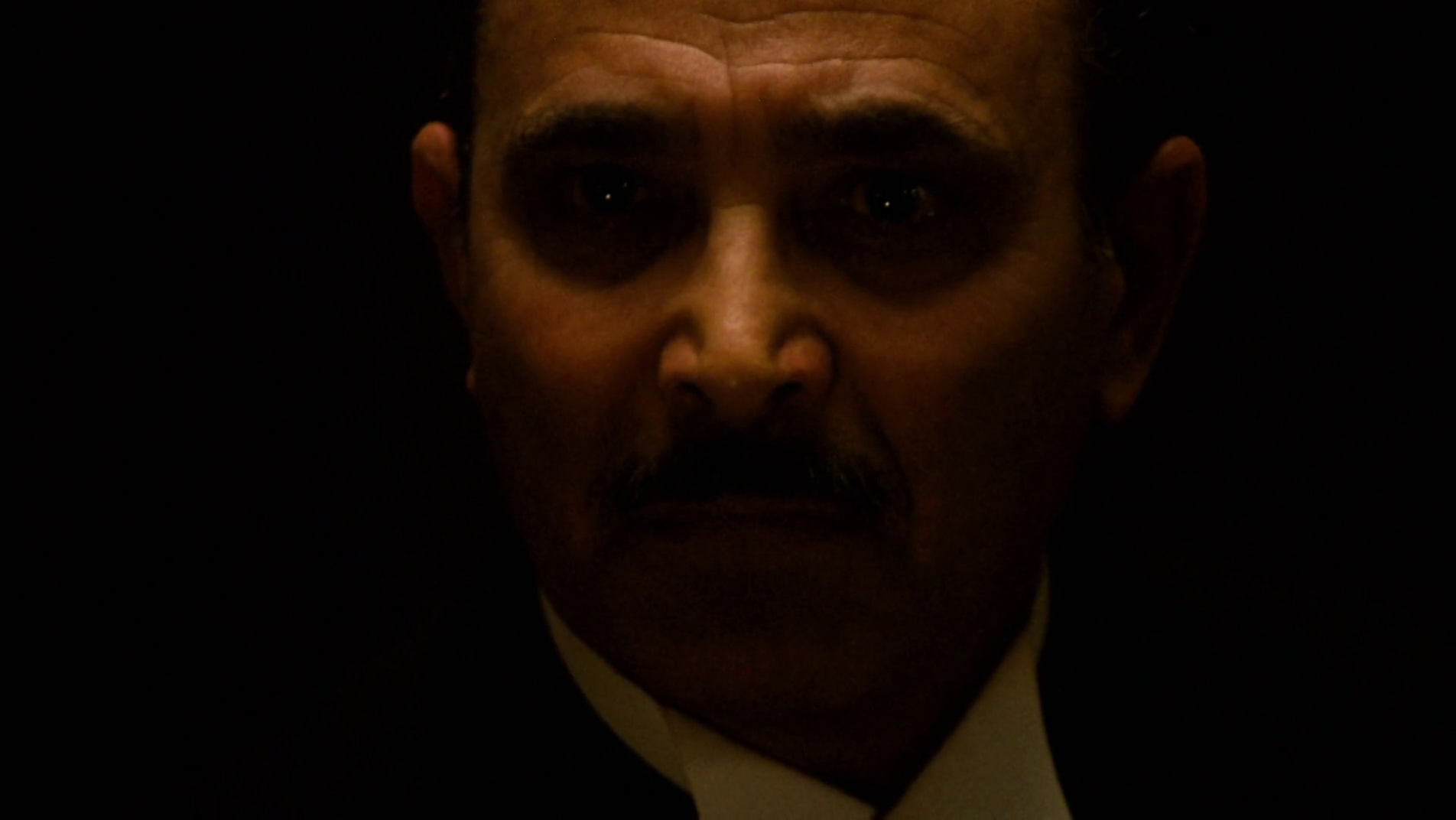
Take the opening image of Francis Coppola’s The Godfather which shows a desperate man worked into a corner so that his only course of action for true Justice is to turn to the mafia.


Or the deep focus shot in Orson Welles’ Citizen Kane that tells three stories with one image.


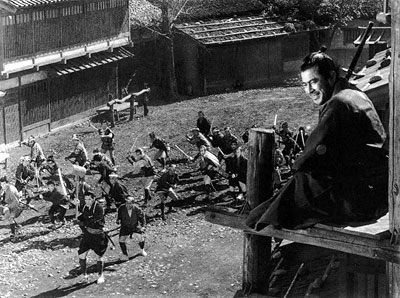
Or this image from Akira Kurosawa’s Yojimbo which shows the roving samurai, a puppet master, perched above his puppets.


Photography underwent a revolution with the advent of the digital camera. So many haphazard images flood the internet now that we can document every moment of our lives. Film is undergoing a similar revolution as digital cameras provide higher quality for fewer dollars. While the mass availability of these media allow for teenagers to mindlessly post photos of their breakfasts, it also enables any individual the opportunity to create great art. And despite all the fluff, the truly great will rise to the top.

Friday, August 9, 2013

What the Hell is a Grip?

You’ve seen them in the credits. Your friends who know a thing or two about the industry might like to drop some line about “the grips.” But what is a grip and what do they do? Your typical corporate video probably won’t need a big enough crew to have a dedicated key grip. Instead, the lighting technician or camera operator may be wearing a couple hats and go into grip mode at points during the shoot. Thus, I will seek to inform you about what exactly a grip does and to highlight some key pieces of equipment that might come in handy (plus, it’s always fun to drop stories about “the grips.” Like: that one time the production assistants beat the grips at darts resulting in the grips doing the PAs wrap duties the next day. Or: that one time the grips decided to strip down and jump in the nearby river after wrap and cat call all the local ladies).

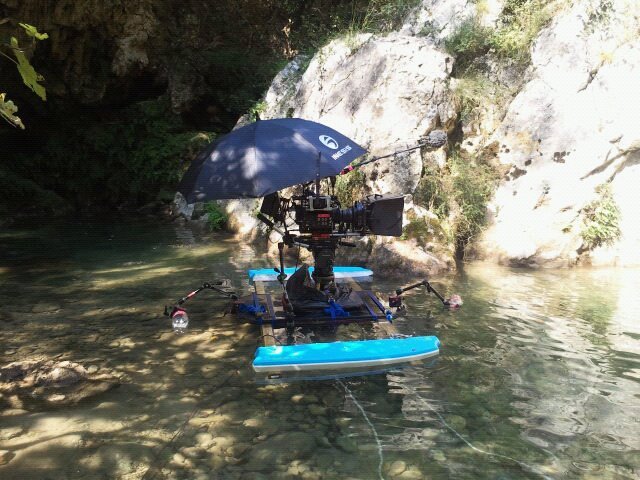
The grip department is basically the support for the camera and electrical crews. On a film set camera, grip, and electrics works together in a three-way tango of sorts to set up every shot. While the grips may be the brunt end of a fair amount of jokes, it’s all in good fun. Everyone has immense respect for the grips who not only have to be incredibly strong physically, but also intelligent enough to find creative, secure, and fast solutions to a number of problems (for example: who do you turn to when you need a bootleg flotation device for your camera? the key grip).

For more photos like this one, check out ShittyRigs.com
Some of the things grips do on a regular basis is: lay dolly track, operate the dolly, rig the camera in all sorts of crazy places (such as cars, trains, plains, snowmobiles, helicopters, &c.), set up massive stands on which to place lights, use nets/flags/frames to shape light, and much more. Since the grips are concocting all sorts of fun rigs, they use a wide variety of tools and hardware to get the job done. Often it has a colorful name, e.g. mombo combo, Gary Coleman, duckbill, Cardellini, gator clamp, apple box, meat axe. Since there is so much stuff in the grip department’s arsenal, I’ll stick to some of the items that you’re more likely to need on a low to medium budget video.


The c-stand – a key player in the grip arsenal is the century stand (almost always called a c-stand). This stand has 1001 uses from holding nets/flags/&c., to holding a boom pole, to holding some bead board, to holding up some cloth for a backdrop. If you’ve been noticing the pattern, it’s great for holding stuff up.

The sandbag – for every stand, there should be at least one sandbag. Since you’re almost always adding weight to the top of these stands, they become quite top-heavy which of course increases the risk of them falling over. The solution to this: toss a sandbag or two on the base of the stand.


Nets, flags, and silks – these accessories are used by the grips to shape and control the lights set up by the electricians. They come in a variety of shapes and sizes from 18”x24” to 2’x3’ to 4’x4’ and larger. Nets generally have a transparent mesh that cuts down on the overall light output from a given source. Flags (also known as solids and sometimes floppies if they have a portion that flops down) are opaque pieces of heavy cloth that serve to eliminate all light output in a given area from a given source. Silks are translucent and serve primarily to diffuse light, creating a softer beam with less noticeable shadows.

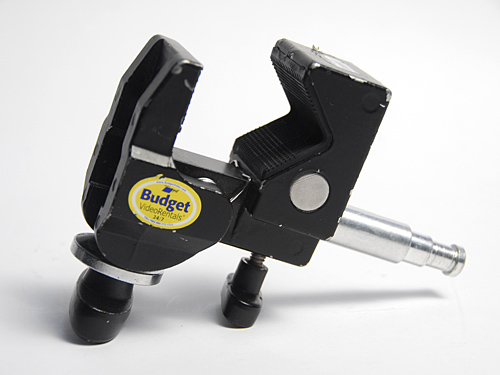
Mafer clamp
Cardellini clamp

Duckbill

Clamps – there are a number of different clamps used in the industry. For now I’ll highlight three of them. The mafer clamp can tighten on to a variety of surfaces and is useful for hanging lights and things from I-beams or those metal grids in the ceiling. A cardellini clamp has a more narrow clamping head and can fit in some places that a mafer clamp can’t. This third clamp has the most names of any piece of equipment I’ve heard of—platypus clamp, quacker clamp, duckbill clamp, bead board holder, &c. This clamp is designed to hold something like bead board where the pressure from the clamp is distributed over a wider area so as not to break the board.

A family of apple boxes
Apple Boxes – apple boxes also have a wide variety of uses. They serve to boost up some shorter sound people so that they can place the boom in ideal position. They can level dolly track on rough terrain. They are often used as seats. They come in four different sizes: full, half, quarter and pancake.

A fischer dolly on track
Dollies and Track – there are a number of different dollies in use in the industry. Two of the major brands are Fischer and Chapman. The dolly is used to mobilize the camera whether it’s a subtle push in or a dramatic tracking sequence. While there are times when certain dollies can have free reign of the floor and move without track, the dolly track (round rail or square) is used to provide a smooth surface for the dolly to operate on. On larger productions there is one grip who is specifically in charge of the dolly (credited as the dolly grip).

This is only a small cross-section of a department that has decades of tinkering experience. The equipment is constantly evolving as grips look for ways to solve problems in simpler, more efficient ways. When it comes to gripology, creativity abounds.

-- by Joseph Baron

Thursday, August 8, 2013

9 Pieces of Lighting Equipment You Should Know About

As promised, here is the start of a series of posts on some of the equipment used in video land. Whether you’re looking to have some inexpensive DIY equipment to use for a weekly video post or you’re looking to understand some of the bigger lights that go into higher budget projects, this post will look at some of the tools available to you. If you talk to people passionate about lighting, they’ll tell you that what they do is paint with light. Take a look at the masterful use of light by Rembrandt, Vermeer, Grimshaw, Renoir, and other great painters. Lighting for film strives to create as much beauty as the works of those artists.
Vermeer - "The Art of Painting"
Renoir  -"Self-Portrait"

For the lower end of the budget spectrum, the tools you have serve more to illuminate than to light, but realize that the art of lighting involves a deep understanding of how light behaves and interacts with its surroundings. A post for another day will be to look at how light can be manipulated to fit certain situations. For now, however, I’ll stick to a more basic description of the lights.

(1) Extension cord – If you are an astute observer, you will have noticed that an extension cord is not, in fact a light. What good is a light if you can’t get electricity to it? While most of the lights will come with a power cord, you often need to place lights farther away from an outlet than the basic cord allows. For most of the lights in this post, a standard hardware extension cord will do the trick. Snag a couple of 25’ cords from your local hardware store and you should be fine.

(2) Practicals – a practical isn’t any one specific lighting instrument. It’s any old light that will be visible within your scene. Table lamps, floor lamps, street lights—these can all act as practicals in your video both illuminating the scene and providing some nice mise-en-scène.
A clamp light
(3) Clamp Lights – these lights can be bought at your local hardware store for under $20. They take your typical incandescent bulbs so you can have some freedom to pop in a 60w or a 200w depending on how much light you want (60w will be dimmer than 200w). These lights come with a clip that can attach to tables, pipes, rails, the metal grid of the ceiling, etc. If you plan on hanging any lights above people, or in an area where people will be present, it is always a good idea to add a safety to it—meaning take some rope and tie it up so that if the clamp slips, the light won’t fall all the way to the ground (or your face). These lights provide a direct beam of light which will most likely cause harsh shadows. In a later post I will talk about different ways to “soften” the source of the light in order to help deal with those shadows.

A Chinese lantern at work.
(4) Chinese lanterns – a staple of the up-and-coming lighting technician, the Chinese lantern is exactly what it sounds like. They are light weight and inexpensive which makes them great to use on a budget. Depending on where you get your lantern, you may have to purchase a socket separately. These, like the clamp light, take incandescent bulbs. One thing to be very careful of is the wattage rating for different sized paper lanterns. Do not use a 150w bulb in a lantern that says the maximum wattage is 40w. This is a fire hazard, so be sure to check the labels/internet to see what size bulbs can go in what sized lamps. Unlike the clamp light, the Chinese lanterns emit a nice soft light that will produce much less stark shadows.

Now we’re going to move on to some more professional lighting instruments that you might consider using on higher budget projects. If you’re looking to add an in-house video unit, you can purchase a good amount of equipment at B+H Photo and Video. If you’re looking just to dabble in your free time without making purchases, there are a number of rental houses (in the Boston area you might try Rule, Quixote, or High Output). Freelancers might also have their own lights that they will include as part of their personal equipment package.

A Lowell lighting kit complete with Pro, Omni and Tota
(5) Lowell lights (the pro, omni, and tota) – this is a bit of a three-for-one deal. A basic Lowell lighting kit like the one shown above comes with three different lights ranging in wattage from 200w – 700w. Compared with your average 60w incandescent lamp, these output a bit more light. Two of the lights pictured here (the pro and omni) come with barn doors that allow you to control the shape of the light. The tota is more difficult to control but offers higher output than the other two. As I affectionately say, the tota basically vomits light.
A set of Arri lights

A set of Mole-Richardson lights

(6) Tungsten Arri/Mole-Richardson lights – The Arri and Mole-Richardson lights shown above are tungsten sources that can range from 100w all the way up to 2kw. As you can tell, the lights are getting a bit brighter as we go. These lights all come equipped with barn doors to help shape the light, and you can also elect to add some other accessories like scrims (circular metal objects that serve to reduce the intensity of a light).

A kino

(7) Kino flos - Kinos are fluorescent lights that avoid the pitfalls of many typical fluorescent fixtures. The main problem with fluorescent lights comes from their slightly greenish emissions. Kino's tubes, however, don't suffer from this problem. They can come balanced for daylight or tungsten and are nice, light-weight sources that produce a soft, even light.


ETC Source 4
(8) ETC Source 4s – typically used in theater, these lights have been popping up more and more in film lighting kits. They come in different degrees (from 5° to 50°) with the narrower angle being a more direct beam of light. Another aspect that sets the source 4s apart from other film instruments is that they have shutters built into the bodies of the lights to create precise cuts of light. The barrel can also be slid forwards and back to focus the beam creating sharp shadows or shadows with more feathered edges.

18kw HMIs
(9) HMIs – the big guns. HMI lights are the big daddies. The smallest is around 575w and the largest, like the pair shown in the picture above, are a whopping 18,000w. These have a wide variety of uses, but one such use is lighting daytime exteriors. The sun is so powerful that in order to use artificial light in a scene, it’s got to pack a punch itself. Your average household circuit will blow many times over if you somehow managed to plug an 18kw light into it. For any HMIs bigger than 2kw, you’re going to need to run power from an external generator or tie in to the main (which is extremely dangerous and should only be done by certified professionals).

This concludes a brief survey of some lighting instruments you should consider when delving into the world of video. Just to let you know, I did not include any LED lights on this list because I haven’t worked with them enough. But LED lights are making a push into the film scene. Happy lighting!

-- by Joseph Baron


Monday, July 29, 2013

Dialogue: A double-edged sword


Dialogue is the most overrated aspect of film.

I say this with the intent to inform the public that, yes – speaking roles in movies are paramount to any successful film, but there should be a sense of frugality incorporated into the writing of a script when one thinks about dialogue.

Dialogue is hard to write. There are several factors to be considered when writing dialogue.

Does each separate character have its own voice? Do they sound different?
Does the dialogue act as a progression in the plot? Does it move the action forward?
Is there new information being revealed to the audience? And is that information, known as exposition, too on-the-nose? Meaning, will the audience feel like they’ve been whacked the head really hard by the writer or director saying “HEY!!! Listen up, this is IMPORTANT!!!”…nobody likes that friend who taps them on the shoulder to say, ‘Hey pay real close attention to this part. Watch it, are you watching?’

No. Nobody likes that. As an audience we like to go to the movie theatre (or sit in the comfort of your own home theatre system, or TV room) and be sucked into the world of the story. We don’t want to be reminded that we’re watching a movie. We want immerse ourselves in the story because it’s compelling enough to capture our attention.

That story will include characters you want to understand via sympathy or empathy. And dialogue is the most difficult tool to utilize as a writer to convey a sense of understanding to the audience.

A great screenwriting professor of mine once told me that great dialogue can make a good movie even better, but that bad dialogue can ruin a great movie immediately. Bottom line – dialogue get’s re-written until it is the most concise, succinct, and anti-verbose as possible. Motion pictures are being made here, I remind you. Moving pictures, visuals, are the primary component and sound and dialogue are added as fine details to the final product.

I’ll use one little example, from one of my more recent favorite films, Drive, by Nicolas Refn Winding. In it, Ryan Gosling shines as a nearly mute lead character that defines himself through his actions, not his words. He has very limited dialogue, and his character doesn’t even reveal his name throughout the entire movie, something which I’ll admit to not even realizing until I looked it up later on IMDB. How do you understand a character who barely speaks or shares very limited information to you? 

His character in my opinion is so compelling because of his non-verbal body language. Every thing he did say, merited some very valuable characterization. Whether it is a simple “Wanna see something?” and have him take his love interest and her son on a sunny Sunday drive down the Los Angeles River, or a simple “Okay,” as a response to whether he’d want some water, Ryan Gosling as “The Driver” gives the audience a tease into the grinding gears of his psyche. It’s only until we see him explode as a character of violent nature later in the film that we realize there is something innately intriguing about him, his motives, and his past. From then on, the audience can only surmise the “why” of his true nature.

That is it right there; a cinematic love and infatuation for ambiguity in complex characters. Nobody wants to be hit over the head with lines of explanation because it removes the fun out of the movie viewing experience. People love to be sleuths, and love to solve mysteries, and it is the mystery of the character that makes roles in certain movies so compelling. It’s when the screenwriter, director, or cameraperson gives you the tiniest morsel of breadcrumbs visually, not aurally, to build to your conclusion without being directly told why through dialogue of the character.

“Drama is life with the dull bits cut out.” Alfred Hitchcock said this.

For a cinematic perspective on life, you can see really good movies written by good screenwriters who tell stories peppered with great dialogue. But it is those few really great screenwriters, however, who can tell an incredible story using as little dialogue as possible.

- Sebastian Gilbert

Wednesday, July 24, 2013

The Method behind the Magic -- Pre-Production

The film world is full of mystery and magic. From Hollywood accounting to special effects to the process of getting a film green lit, there’s a lot about making movies that happens behind the scenes. To the unitiated, a complicated dolly move that took an hour and a half to set up and shoot is nothing more than a 20 second shot in the final product. So what exactly has to happen to take that blockbuster idea of yours from cerebrum to celluloid?
            Before I even being talking about the three stages of production, I want to call attention to the 7 Ps. Important in film and life in general, they will save you time, money, and headaches. Proper prior planning prevents piss poor performance. The more you plan, the better your final product will be.
            A video generally goes through three stages on its journey from idea to completion: pre-production, production, and post-production. Pre-production encompasses the planning, writing, and storyboarding phase. Production entails the actual shooting of the content. And post-production is the process of editing the footage together, completing the sound design, adding music, &c. Making a successful video is a lot more intense than thinking up an idea, getting a consumer camera from Best Buy and uploading it to YouTube.

Pre-Production
            The first step in any video project is the initial idea—what is your story? Before you even start thinking about what equipment you’re going to need, you should know exactly what story you want to tell. Evertrue’s recent Reunion Crashers video is a great example of an engaging story. I didn’t have anything to do with the making of that video, but I think it’s a great example of a story that aligns with the image of the company while at the same time conveying valuable content and entertaining the viewer. The reason story is so important in this day and age is because audiences have been highly trained to tune out content they don’t want to watch—fast-forwarding through commercials, or flipping to an alternate window to ignore a YouTube ad. In order to create a video worth watching, you have to start with a story worth telling.
            Once you’ve come up with the perfect story to show the world—a story that connects with people, that conveys your brand image, and that inspires action—you can start planning how to turn this idea into reality. Some of the big steps after creating the story are: storyboarding the video, budgeting the video, choosing what equipment to use, deciding whether to do it in-house or hire an outside crew, securing any necessary locations, hiring actors or drafting talent from within, scheduling the shoot date(s), and meeting with all the creative forces to go over everything before the date of filming. I’ll touch briefly on each of the components.
            Storyboarding – this step involves putting together a detailed outline of how you want the story to progress. Feel free to make little drawings so that you have a comic strip showing the flow of the video.
            Budgeting – not every video needs to have a massive budget. For something like Localytics’ white board Wednesday, a budget of $10,000 would be complete overkill. If, however, you’re looking to put together a larger scale project, then you need to budget accordingly. The budget covers such things as equipment, crew, locations, talent, music, editing, sound design, and props. You can lower the budget by shooting in your office with employees as actors, but understand the trade-offs you’re making. Good, fast, and cheap—you can get two of those things at the same time, but not all three.


            Equipment – a lot of film equipment looks odd and has an even odder name. Cardellinis, mafers, platypus clamps, Gary Colemans, mickeys, C-47s (which are just clothespins). A full-scale heavy-duty film set has its own language. Choosing the right equipment for the job depends on the specific project. Something like white board Wednesday can be done with a prosumer camera from Best Buy. Something like Reunion Crashers calls for more professional-level equipment. Stay tuned for a more in-depth blog post regarding equipment.
            Crew – while many freelancers own their own gear and will most likely bill you for it, their labor is a separate expense. Deciding to handle production yourself or hire freelancers again depends on the specific project. If you bring on an independent producer, talk over the amount of crew you’re going to need for the shoot. A simple interview setup can be completed by a team as small as three—a sounder recordist, camera operator, and gaffer. Larger scale productions require larger teams. Next time you see a blockbuster Hollywood film, stay to the end of the credits and watch how many people are involved in the whole process. And that’s not even everyone who worked on the movie.
            Locations – the location of your video plays an important role in the look and feel of the piece and certain locations require more paperwork/guile than others. Shooting in your office is an easy and cost-effective solution but if the space doesn’t have that visual aesthetic, you might need to go further afield. Permits and permission are generally good to have and take time to get. If you know you’re going to need to film in a pizza shop, start contacting local pizzerias and try to get the best deal you can. If you want to film on the street or in a public park, you could try to go guerilla and “steal the shot” but understand that you might have to shut down production early.


            Talent – you probably won’t be able to land Ryan Gosling for your next video (if you do, Comet Tale would love to produce your next video). If you decide to use employees, make sure they’re comfortable with being on camera. If you elect to use actors, you can reach out to casting agencies or use a website like New England Film.
            Scheduling – when scheduling your shoot, there are a number of factors to consider. Number of locations, number of days to shoot, availability of talent, &c. If you are going to be shooting in multiple locations, it’s best to shoot all of one location before moving to the next (seems like common sense, I know). If you have multiple days of shooting, try not to schedule exterior shots for the last day as weather is incredibly unpredictable. Don’t underestimate the amount of time needed to set up and light a scene. If you are unsure of how long to schedule for this, talk with your producer or crew members for estimates. And most importantly, do not forget about lunch. An efficient crew is a well-fed crew is what I always say.
            Meeting of the minds – you may need to schedule more than one meeting of all the major creative forces, but I would make sure to have at a bare minimum one. This should include the producer, director, director of photography, and whatever members of your team involved in the creative process. This is your chance to ensure that everyone is on the same page and that everyone will be making the same movie. The last thing you want is to have the producer running towards one vision, the director another and the cameraman yet another.


            I had originally intended to cover all three aspects of production in this post but got a little carried away. The second and third stages won’t take as long to cover so I’ll lump them into one post. I hope you’ve caught a glimpse of the man behind the curtain and if you have any questions about the nitty-gritty of the process don’t hesitate to reach out.

-- by Joseph Baron

Monday, July 22, 2013

Thursday, July 18, 2013

The Magic of the Movies

“No form of art goes beyond ordinary consciousness as film does, straight to our emotions, deep into the twilight room of the soul.” – Ingmar Bergman

No art form so completely engages the senses like film.  This isn’t to lessen the value of the written word, of music, of painting; but only in film are all of these amazing arts fused together to make a greater whole. 

It all starts on the page.  Screenwriting has attracted the greatest writers from other fields.  Pulitzer winning playwright David Mamet has worked in film for years while fellow Pulitzer winning author Cormac McCarthy has written his first screenplay “The Counselor”, which is set to come out later this year.

After the script is perfected, it is placed in the hands of a gifted director.  This includes directors who honed their skills on the stage, in commercials, or in music videos.  These men and women translate the written word into visual art, collaborating with actors, cinematographers, costume designers, production designers and many more to ensure the quality of everything in front of the camera.

Once the principal photography is completed, composers attempt to create a score that perfectly blends with the visuals.  This field has attracted classical composers like John Williams, former composer of the Boston Pops Orchestra, as well as modern rock stars such as Jonny Greenwood of Radiohead and Trent Reznor of Nine Inch Nails. 

A single person can write a book, or create a beautiful painting, or record a classic song.  In film, this is impossible.  Many have tried to make films by themselves, few have succeeded.  A wide range of creative minds is needed with the support of a hardworking crew.  But why do the greatest talents in directing, music, art, fashion (Giorgio Armani designed the costumes for Brian DePalma’s “The Untouchables”) agree to step out of their individual fields to collaborate with others?  Why step out of their comfort zones to take a relatively small role on the set of a film? 

Because when the lights go down in the theater and the image comes up, the audience is enthralled.  A great line of dialogue, a spot-on acting performance, a fitting musical cue will stick with the viewer for a long time.  And when it all comes together, when John Williams’ score picks up as Elliott races his bike away from cops with E.T. in his basket, only to fly away from all his troubles, the viewer’s emotions are overwhelmed by the immersive experience.  The moment is forever immortalized in the hearts and souls of those who see it.  And it is moments like this when film transcends other art forms.    It is moments like this, when film is perfect.

-- by Curt Ege